
Monitoring Elk, Snowpack, and Forage in Teton County’s Wildlife Haven
Summary of Winter Conditions and Elk Distribution
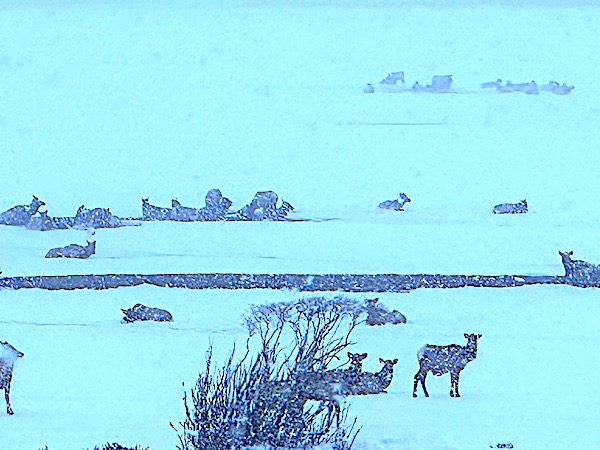
The 2026 winter continues to be very mild for ungulates in Jackson Hole, with valley snowpack depth well below average and no extreme cold periods to date. Conditions mirror those of 2018, the last winter without supplemental feeding on the National Elk Refuge. As of February fifth, 2026, adequate forage remains on the southern half of the refuge, and feeding is not recommended at this time.Refuge elk numbers reached a high in late December and fluctuated through January due to movements between the refuge and southern Grand Teton National Park. Since late January, elk have returned, with six thousand six hundred twenty-six observed in the standard survey area on February fifth. GPS data from fifty-two collared elk confirms ninety-six percent were using the southern half as of February second.Bison numbers were limited in January due to mild conditions and hunting disturbance, but with the season ending January thirty-first, three hundred fifty bison were counted in the McBride area on February fifth. Approximately thirty bison were harvested during the refuge season.For similar updates on refuge wildlife trends, check out this story on the National Elk Refuge Provides Biological Update for Early January 2025.
Snowpack and Forage Availability
Snow conditions show only patchy coverage on the southern half of the refuge, with significant melting since January thirty-first. As of February sixth, 2026, snowpack depth at the Refuge Headquarters monitoring site was one point two inches, ninety-one percent below the long-term average of twelve point nine inches for this date.In collaboration with Wyoming Game and Fish Department, forage availability is monitored at key index sites across the southern portion. Historically, supplemental feeding begins when average available forage declines to three hundred pounds per acre, though this can vary based on objectives and elk movements. As of February fifth, average available forage was eight hundred five pounds per acre.Learn more about past feeding decisions in this article on National Elk Refuge begins supplemental feeding operations.
Ongoing and Upcoming Elk Research
The National Elk Refuge has equipped elk with VHF radio collars since nineteen seventy-eight and GPS collars since two thousand eight. Currently, in collaboration with the Jackson Hole Cooperative Elk Studies Group and Grand Teton National Park, fifty-two adult female elk wear GPS collars, all captured on refuge feedgrounds for representation of those likely to use supplemental feeding. These collars collect locations every one point five hours, aiding in tracking migration, habitat use, and feeding effects.Data has supported peer-reviewed articles, including findings on increased short-distance migratory elk and their behaviors. Wyoming Game and Fish Department is leading a new study emphasizing short-distance migrants, increasing GPS collars on cows and bulls, and capturing on native winter range and feedgrounds. The refuge will collaborate, incorporating existing data.A two-page summary of the study’s objectives is available, with detailed information at https://storymaps.arcgis.com/stories/cf14b5371d104b68828db94ef180df3f. Captures and deployments begin next week using helicopters and ground darting on the refuge and Forest Service land east of it.
For insights into refuge management practices, read about the Elk Refuge Burn Planned.
Snow conditions show only patchy coverage on the southern half of the refuge, with significant melting since January thirty-first. As of February sixth, 2026, snowpack depth at the Refuge Headquarters monitoring site was one point two inches, ninety-one percent below the long-term average of twelve point nine inches for this date.In collaboration with Wyoming Game and Fish Department, forage availability is monitored at key index sites across the southern portion. Historically, supplemental feeding begins when average available forage declines to three hundred pounds per acre, though this can vary based on objectives and elk movements. As of February fifth, average available forage was eight hundred five pounds per acre.Learn more about past feeding decisions in this article on National Elk Refuge begins supplemental feeding operations.Ongoing and Upcoming Elk ResearchThe National Elk Refuge has equipped elk with VHF radio collars since nineteen seventy-eight and GPS collars since two thousand eight. Currently, in collaboration with the Jackson Hole Cooperative Elk Studies Group and Grand Teton National Park, fifty-two adult female elk wear GPS collars, all captured on refuge feedgrounds for representation of those likely to use supplemental feeding. These collars collect locations every one point five hours, aiding in tracking migration, habitat use, and feeding effects.Data has supported peer-reviewed articles, including findings on increased short-distance migratory elk and their behaviors. Wyoming Game and Fish Department is leading a new study emphasizing short-distance migrants, increasing GPS collars on cows and bulls, and capturing on native winter range and feedgrounds. The refuge will collaborate, incorporating existing data.A two-page summary of the study’s objectives is available, with detailed information at https://storymaps.arcgis.com/stories/cf14b5371d104b68828db94ef180df3f. Captures and deployments begin next week using helicopters and ground darting on the refuge and Forest Service land east of it.For insights into refuge management practices, read about the Elk Refuge Burn Planned.Early Signs of Spring and Future OutlookNational Elk Refuge naturalist Gannon Castle observed a male red-winged blackbird near the visitor center on February fourth, 2026, signaling early signs of spring amid the mild winter.This update highlights ongoing monitoring to support wildlife health and management in Jackson Hole, with no immediate need for supplemental feeding due to favorable conditions.
10 web pages

- National Elk Refuge February 2026 Biological Update: Mild Winter Persists in Jackson Hole - February 9, 2026
- Wyoming Game and Fish Hosts Workshops on Elk Feedground Management Action Plans - February 9, 2026
- Jackson Town Council Considers Unmet Housing Grant Application for S4 Flats on January 20th - January 20, 2026